|
 |
The Old St Beghian | |
| January 2026 | |||
George Robson (FN 57-64) and the Lighthouse.
“There are numerous sporting activities available to St Bees’ pupils but surely each has, willingly or unwillingly, been a runner. The only activity that I myself excelled in was running, having been a member of the running eight for three years.
High House Road / Triangle / Sandwith / Sea Mills / Three Sisters / Lighthouse are just some of the routes I recollect we followed.
For those not chosen for any other activity a concern for the day was what the housemaster or head of house was to choose for the day’s run. Would it be the shortest - the Triangle - or the longest - the Lighthouse via Sandwith? After all, there is a big difference between a mile and a half and five miles!
I guess I did the arduous Lighthouse run five times in my day during which the only thing I knew about the lighthouse was that we were honour bound to touch its wall before turning back.
That is until now when I have turned to researching it.
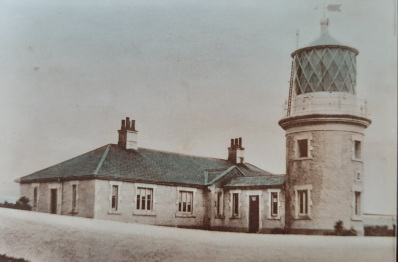
I’m sure very few know that St Bees lighthouse is the highest in England (335 feet). In 1718 Trinity House rented some land on the Head from St Bees School (ensuring ongoing finance) and employed architect Thomas Lud(g)widge to oversee the construction of a lighthouse. It turned out to be the first of three lighthouses on the site, a structure 9 metres tall, 5 metres in diameter and topped by a large metal grate that burnt coal. By 1822 it was the last coal powered lighthouse in Britain when it was destroyed by fire and, tragically, along with the lighthouse keeper’s wife, Mary Clark, and her five children all perishing by suffocation.
As soon as the following year a second lighthouse was completed, built by John Nelson for £1,447 but continuing to provide the school with an income. It differed very little in construction from its predecessor. However, it was to be transient in that as soon as 1866 it was decided to replace it with a more ambitious third – the one that still exists today. Architect Henry Norris alongside Trinity House arranged a well-attended grand opening ceremony at which newspapers of the day, a set of coins of the realm and various commemorative scrolls were buried in a zinc box. The light was to be visible for 24 seconds, eclipsed for two seconds intervals and could be visible out at sea for 24 nautical miles.
During WW2 the home guard used the lighthouse as an operational base. Also, during the war, a sad event was that one of the refugee pupils from Mill Hill School fell and was killed in the area of the lighthouse following which permission to climb the Head had to be sought by pupils of both schools. Since the war the lighthouse has been put to an extra use - a turning marker for the annual Isle of Man air races.
The light and fog signal remained operational until the end of 1950 but early in the 1960s a more advanced triple frequency tannoy electric fog signal heard 20 miles at sea was put in place in a detached building very close to the cliff edge.
In 1987 the light was fully electrified with a beam that can now be seen 33km away, demanned and automated at the same time. Also, in that year the foghorn which used to sound every 45 seconds was discontinued.The lighthouse is now monitored and controlled from Trinity House’s Planning Centre in Harwich, Essex.
In the summer of 2024, a friend and I went on the inland route to the lighthouse when I made my sixth and almost certainly my last visit. I didn’t spot any changes, but knowing what I know now, was disappointed not to see any plaque or other memorial to poor Mary Clark and her five children who perished in that fire of 1822. But at least they are remembered by inclusion in this article.Wikipedia lists 30 other references and shows numerous photographs.”

Home
The St Beghian Society
St Bees School,
St Bees, Cumbria, CA27 0DS.
Tel: (01946) 828093 Email: osb@stbeesschool.co.uk
Web: www.st-beghian-society.co.uk
